There is a particular moment every winter when you take off your hat in a warm office, glance at your reflection in the lift mirror, and discover that your hair has developed a mind of its own. Flat on top. Frizzy at the ends. A few strands standing straight up, waving at nobody in particular.
It’s not you, and it’s not your hair being difficult. It’s physics, mixed with a bit of friction and a lot of central heating. Here’s what’s happening, what genuinely helps, and what a salon can do that a can of anti-static spray can’t.
Why Hair Goes Electric in Winter
Static electricity builds up when two materials rub together and swap electrical charge. In humid conditions, water molecules in the air carry that extra charge away before it becomes a nuisance. As a physicist explained to Northeastern University, winter air holds less moisture, so the charge has nowhere to go. Hair strands pick up the same charge, repel each other and stand on end.
Cold air outside and heated air inside are a double hit. Both are very dry, so your hair, which loses moisture easily, becomes a perfect home for static. Dry or damaged hair holds charge more readily than healthy, well-moisturised hair, which is why some people suffer far more than others.
The Hat Problem
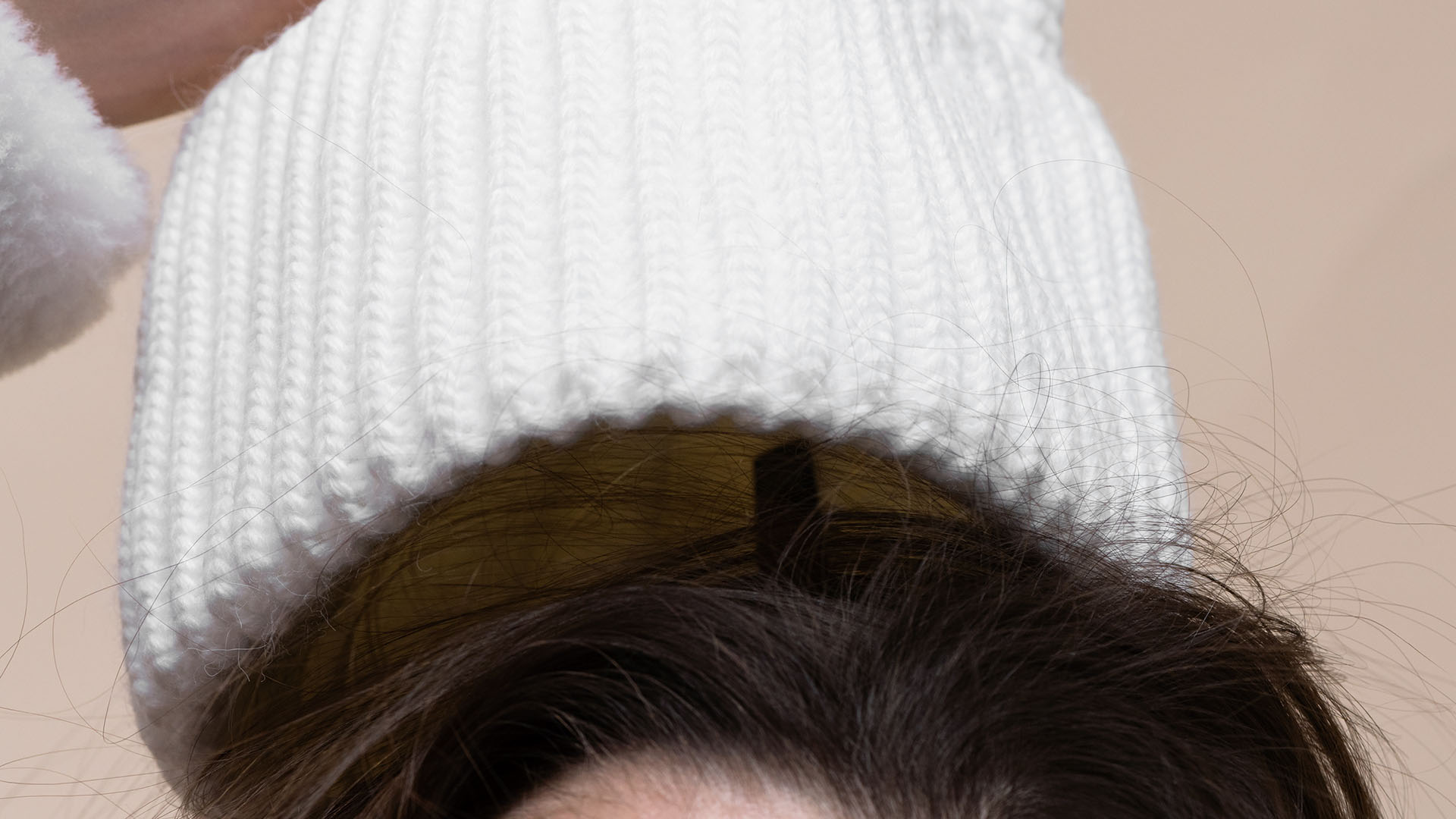
Hats are the most obvious culprit. Hair brand Redken explains that hair rubbing against dry fabrics such as wool or cotton, particularly in low humidity, builds up a charge that can’t easily dissipate. Take the hat off and your hair rises to greet the room.
Hat hair has a second symptom that has nothing to do with static: the flat, dented look left behind by squashing your hair for an hour. That one comes down to pressure and a bit of warmth and moisture under the fabric.
What helps with hats
- Choose smoother linings. Silk or satin-lined hats let hair glide rather than grab, which cuts down on friction.
- Flip your parting. Wear your hair parted on the opposite side while the hat is on, then flip it back afterwards for a bit of extra lift.
- Start with dry hair. A hat over damp hair is a recipe for frizz and a flat crown.
- Loosen up. A looser, slightly bulky hat distributes pressure and leaves your style less squashed.
- Carry a small brush. A quick brush through, from the ends upwards, brings back shape in seconds.
Scarves, Collars and Coats
Hats get the blame, but scarves and high collars cause plenty of their own trouble. Wool and synthetic fabrics rub against the lengths of your hair all day, and the friction roughens the surface of the strands, leaving ends frizzy and tangled.
If you have longer hair, tuck it into a loose plait or low bun under your scarf rather than letting it get squashed against your coat. It keeps the ends from rubbing and saves you from the daily detangling session.
What Actually Helps at Home
The honest answer to static is moisture, in the hair and in the air. A few habits make a real difference:
- Condition properly. A good conditioner after every wash, and a deeper mask once a week, helps hair hold on to moisture. Dry hair is the most static-prone hair.
- Use a leave-in product. A light leave-in conditioner or serum helps smooth the surface and weigh strands down, so they’re less inclined to fly away.
- Swap plastic for natural bristles. Wooden combs and boar-bristle brushes create less static than plastic ones.
- Turn down the heat. Very hot showers and heavy blow-drying both strip moisture. Use a heat protectant and lower the temperature.
- Add moisture to the air. A humidifier in the bedroom or by your desk helps, and so does a bowl of water on a radiator.
- Use water. A little water on your hands, smoothed lightly over the hair, can calm a static fly-away in seconds.
Hairspray lightly misted onto a brush before you use it is another old stylist’s trick. It’s not glamorous, but it works in a pinch.
Rethink Your Winter Wash Routine
Celebrity hairstylist Bridget Brager, speaking to AOL, names winter as typically the worst season for static, with hats and scarves going on and off adding friction to the dry air. Her suggestions include shampooing a little less often and letting hair air-dry more where you can, using a hairdryer only until the strands are damp.
That fits what we’d suggest for most people. Washing every single day strips natural oils, and in winter those oils are doing useful work. If your scalp copes with it, stretching to every second or third day can leave hair softer and less charged. If your scalp gets oily quickly, don’t force it. A gentle shampoo and a good conditioner, concentrated on the lengths, is a better compromise.
What a Salon Treatment Adds
Products you buy off the shelf are useful, but a professional hair treatment works at a deeper level. It can restore moisture and strengthen the hair fibre in a way that a mask in the bathroom cupboard can’t always manage, especially if your ends are already dry from a summer of sun and swimming.
If frizz is your main complaint, a smoothing treatment can help the hair lie flatter and behave better in dry or damp weather. To be straight about it: it won’t make hair immune to static, and nothing will. But hair that’s smoother and better conditioned generally gives static less to work with. Our piece on frizz-free hair through the rain explains how smoothing treatments work and who they suit.
Your Cut Matters More Than You Think
A cut that sits well under a hat and scarf makes the whole problem smaller. Layers that add movement tend to recover quickly after being squashed, while very heavy, blunt lengths show every dent. If you’re regularly wearing a beanie, a soft, textured shape often copes better than a razor-sharp one.
This is where our styling team can help. Tell us you wear a hat most days and we’ll factor it in, from how the layers are cut to how you finish your hair in the morning. It’s a small detail that saves a lot of daily irritation.
Don’t Forget the Scalp
Winter is hard on the scalp as well as the hair. Dry air can leave it tight and flaky, and wearing a hat for long periods can leave it feeling warm and a bit greasy. If your scalp is uncomfortable, it’s worth paying attention to it separately, and our guide to scalp care is a good place to begin.
Persistent itching, redness or flaking that doesn’t improve with gentle care is worth mentioning to your GP or pharmacist, because some scalp conditions need specific treatment.
A Five-Minute Morning Routine for Hat Days
If you know a hat is going on, a few minutes of preparation saves you the flat-and-frizzy aftermath:
- Dry your hair completely before it goes anywhere near a hat, or it will dent and frizz.
- Smooth a pea-sized amount of leave-in conditioner or serum through the mid-lengths and ends.
- Part your hair on the opposite side to usual, or tie it loosely, depending on the hat.
- Choose a hat with a smooth lining, or slip a silk scarf underneath if you can’t.
- Take it off gently, flip your parting back, and finger-comb the hair into shape rather than dragging a brush through it.
It sounds fussy written down. In practice it takes about as long as finding your keys.
A Winter Hair Kit Worth Carrying
- A wooden or boar-bristle brush that lives in your bag
- A small leave-in spray or serum for the ends
- A couple of hair grips or a soft clip for emergency tidying
- A silk or satin scrunchie, kinder than a standard hair tie
- Lip balm and hand cream, because you’re not the only thing drying out
Quick Answers on Winter Hair
Why is my hair only static in winter? Because the air is at its driest and heating makes it drier still. In more humid months, the moisture in the air carries static charge away before you notice.
Does fine hair suffer more? Often, yes. Fine, lightweight strands tend to lift more easily, so they show static more. Keeping fine hair well conditioned without weighing it down is the balancing act.
Do I have to stop wearing hats? Certainly not. A smoother lining, properly dry hair and a bit of leave-in product reduce most of the problem. Hats are good for ears.
Can a haircut help? It can. Soft, movement-friendly layers recover better after a hat than heavy, blunt lengths, and a regular trim keeps dry, snagging ends under control.
When should I worry? Static and frizz are cosmetic. Sudden hair loss, a very sore or inflamed scalp, or patches of broken hair are different matters, and worth discussing with your GP.
Book a Winter Hair Check
If your hair is dry, flat, frizzy or all three, our team in Widnes can suggest a treatment, a cut or simply a better routine for the colder months. Call us on 0151 420 5656, book online, or visit us at 190 Lunts Heath Road, Widnes, Cheshire, WA8 5AZ.