We wrote earlier in the year about what sun, salt and chlorine do to hair over a summer holiday. Autumn in Widnes presents its own, less glamorous version of the same problem: near-constant drizzle, a sharp jump in humidity, and hair that seems to have a personal vendetta against however long you spent on it that morning. If your blow-dry survives the walk to the car but not the walk from the car, this one’s for you.
Why Damp Air Wrecks a Good Blow-Dry
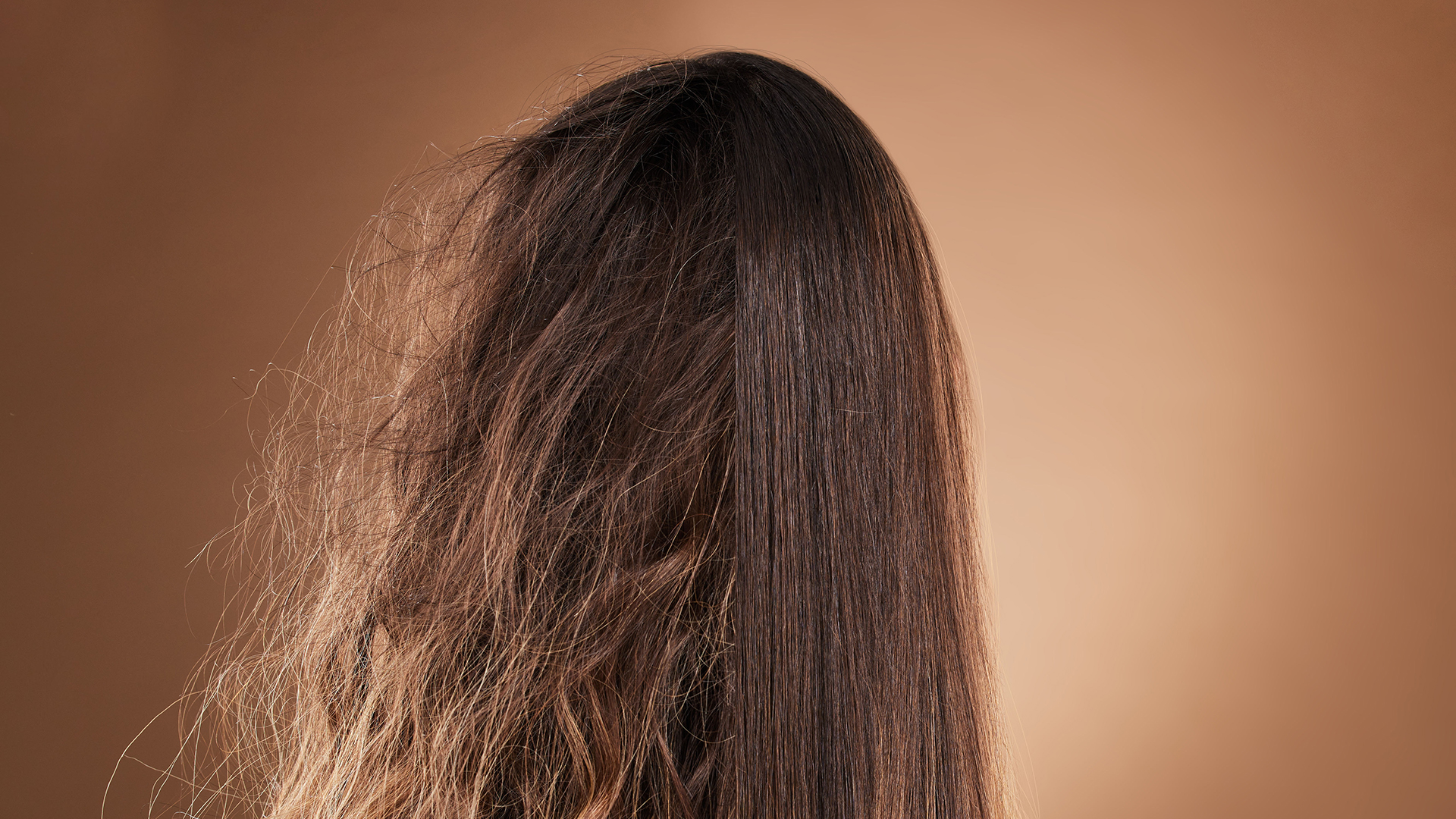
Frizz happens when moisture from the air gets into the hair shaft and disrupts its structure, causing the outer cuticle layer to lift and swell. Straight, smooth hair reflects light evenly and looks sleek precisely because the cuticle lies flat; the moment it lifts, that same hair scatters light in all directions, which reads to the eye as frizz, however good the style underneath actually was.
Porous hair, whether from colour, previous heat damage, or simply hair type, absorbs that ambient moisture faster and more unevenly than healthy hair does, which is exactly why some people seem to frizz within minutes of stepping outside while others barely notice the weather at all.
What a Smoothing Treatment Is Actually Doing
A professional smoothing or keratin-based treatment works by filling in gaps in the hair’s cuticle and sealing it, so the hair shaft has less opportunity for moisture to get in and disrupt its shape in the first place. It’s a genuinely different mechanism from a serum or oil sitting on top of the hair, which can help temporarily but won’t change how the hair itself behaves once you’re a mile from home in the rain.
The formulas have also moved on considerably. Older-style keratin treatments relied heavily on formaldehyde-releasing ingredients to lock hair into a smoother shape, which came with a genuine list of health concerns and a rather unpleasant smell during application. Current formulations lean far more on plant-based proteins and gentler bonding agents to achieve a similar effect without those trade-offs, an important shift if you were put off smoothing treatments in the past for exactly that reason.
What It Won’t Do
A smoothing treatment reduces frizz and makes hair considerably more manageable; it doesn’t make hair completely immune to weather, and any salon promising total invincibility against a genuinely wet British November is overselling it slightly. What you should reasonably expect is hair that takes noticeably longer to frizz, styles more easily on a daily basis, and needs far less daily heat to look presentable, rather than hair that behaves identically whatever the forecast says.
Is It Right for Your Hair Type
Smoothing treatments work across most hair types, but the approach and expectations differ. Curly and coily hair can benefit hugely, particularly if the goal is more manageable, defined texture rather than fully straight hair, and a good stylist will tailor the treatment to reduce frizz while keeping your natural pattern rather than erasing it entirely. If you want to keep your curl or wave pattern intact, say so clearly at your consultation; “anti-frizz” and “pin straight” are not the same request, and a good hair smoothing appointment should start by clarifying exactly which one you actually want.
Getting the Most Out of the Treatment
- Avoid washing or tying hair up for the first couple of days, as advised by your stylist, since this window matters for how well the treatment actually bonds
- Switch to a sulphate-free shampoo afterwards, which extends how long the smoothing effect lasts considerably
- Skip tight hair ties and clips in the first few days, since kinks set into freshly treated hair more readily than usual
- Pair it with a strengthening treatment if your hair is already colour-treated, so you’re building on healthy hair rather than layering more processing onto already stressed strands
If Your Hair Is Already Having a Rough Autumn
If summer left your hair in poor shape and it never quite recovered, as we covered in our piece on holiday hair recovery, it’s worth addressing that condition with a proper hair treatment before adding a smoothing service on top. Smoothing porous, damaged hair can give patchy, less predictable results than doing the same treatment on hair that’s already in reasonably good condition, so a bit of sequencing goes a long way.
Book Ahead of the Wet Season
If you’re tired of losing the battle with British weather every time you step outside, our team in Widnes can talk you through whether a smoothing treatment, a strengthening treatment, or a combination of both makes sense for your hair. Call us on 0151 420 5656, book online, or visit us at 190 Lunts Heath Road, Widnes, Cheshire, WA8 5AZ.